Creating a more sustainable home doesn’t necessarily mean making dramatic changes. Some of the simplest improvements can actually start in the kitchen. Sustainable kitchen upgrades can help you create a space that is practical and stylish whilst being aware of the materials you are using as well as what is going to waste and what is not.
You might be planning to do a full renovation or maybe your just looking for sustainable kitchen ideas that you can add as time goes by, either way, there are loads of ways that you can make a difference without sacrificing the look or feel of your home.
1. Choose Energy-Efficient Kitchen Appliances
One of the most practical sustainable kitchen upgrades is choosing energy-efficient appliances when your existing ones eventually need replacing.
Fridges, freezers, dishwashers, ovens – you name it – they can all contribute to household energy use, so choosing the sustainable option and finding energy-efficient kitchen appliances can help to reduce the amount of energy that your kitchen uses over time.
Saying this though, sustainability doesn’t necessarily mean replacing an appliance that still works perfectly fine. Carrying on using your appliance that is in good condition can also be the better decision instead of just throwing it out and wasting it.
When it is time to replace your appliance, look for a practical and efficient model that fits the size and needs of your house instead of choosing the newest option or maybe following the trend at the time. Remember your decision does affect the environment we live in.
2. Switch to LED Kitchen Lighting
Lighting is another easy area to consider and improve when looking at eco-friendly kitchen upgrades.
LED bulbs use less energy than traditional incandescent bulbs and to make things better, they are available in a wide range of styles, colours and brightness levels. That just shows that even whilst choosing the more sustainable option, we actually don’t need to sacrifice the aesthetics, we have so many options available to choose from, all we have to do is a bit of research and I’m sure there’ll be something which clicks with your style.
As well as this, instead of lighting the whole kitchen up unnecessarily, you can use the light only where needed, like only turning on the light over your worktop and food-prep area. This makes the kitchen more practical while using lights where you actually need it instead of lighting the whole kitchen.
3. Sustainable Kitchen Materials to Consider
If you’re renovating your kitchen, the materials you choose to use can actually make a big difference to the overall design.
When looking at sustainable kitchen materials, look further than the first appearance of a product. Think about where the material comes from, how durable it is, how much maintenance it requires and how long you expect it to last.
Sustainably sourced wood, recycled materials and durable surfaces might be worth considering depending on your style and budget.
The most sustainable choice doesn’t always mean the material with the most obvious eco-friendly label. How long the material lasts matters too!
4. Refresh Your Existing Kitchen Instead of Replacing Everything
Replacing your whole kitchen and everything in it isn’t always needed.
If your kitchen cabinets are still in good condition, small changes like repainting the doors, replacing the handles, changing the lighting or adding a new splashback can help transform the look of your kitchen.
This can be one of the easiest ways to make your kitchen more sustainable because you’re working with what you already have instead of just replacing them when they are in fairly good condition.
Sometimes, a small update to your room can give you that fresh look you’re after without you having to do a full renovation.
5. Reduce Food Waste
Making your kitchen more sustainable isn’t only about the appliances and materials.
The way we use our kitchens matters too.
Planning your meals, keeping food stored correctly and making better use of leftovers can all help reduce unnecessary food waste. Keeping your fridge organised can help in making it easier to see what you already have and what needs to be used up before it goes bad and has to be thrown out.
These small habits can make a visible difference over time, especially if they’re done consistently and turn into a part of your routine.
6. Make Recycling Easier
Recycling is so much easier to keep up with when your kitchen is designed around it.
If you have the space, think about adding separate recycling bins or a dedicated recycling area to your kitchen storage.
This way, by making recycling convenient it can encourage everyone in your house to use the right bins and to reduce the amount of recyclable material that ends up in the general waste.
Don’t forget to check your local council’s recycling requirements, as the accepted materials can vary depending on the location!
7. Sustainable Kitchen Upgrades for Saving Water
Another thing you should consider when planning your sustainable kitchen design is water use.
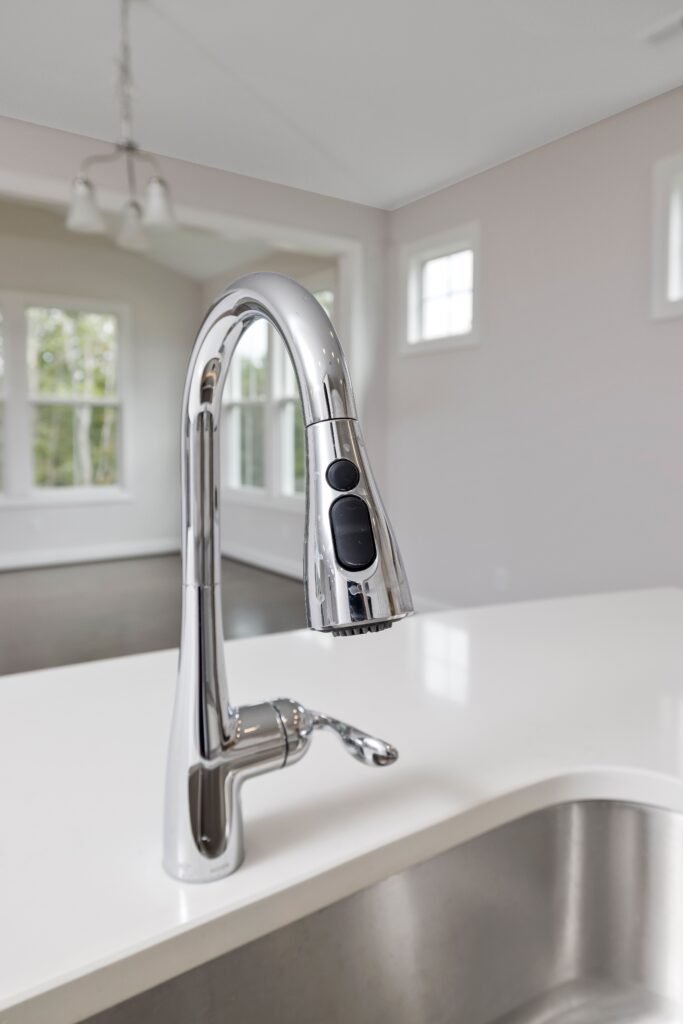
If your kitchen tap needs replacing, have a look at a water-efficient model. This will help to reduce unnecessary water usage in everyday tasks like washing up the dishes or when preparing food for the day.
You don’t have to make a massive dramatic change. Something simple like picking a more efficient fitting when something needs replacing can be a step towards a more sustainable kitchen.
8. Invest in Durable Kitchenware
Sustainability is also linked to everyday products we use.
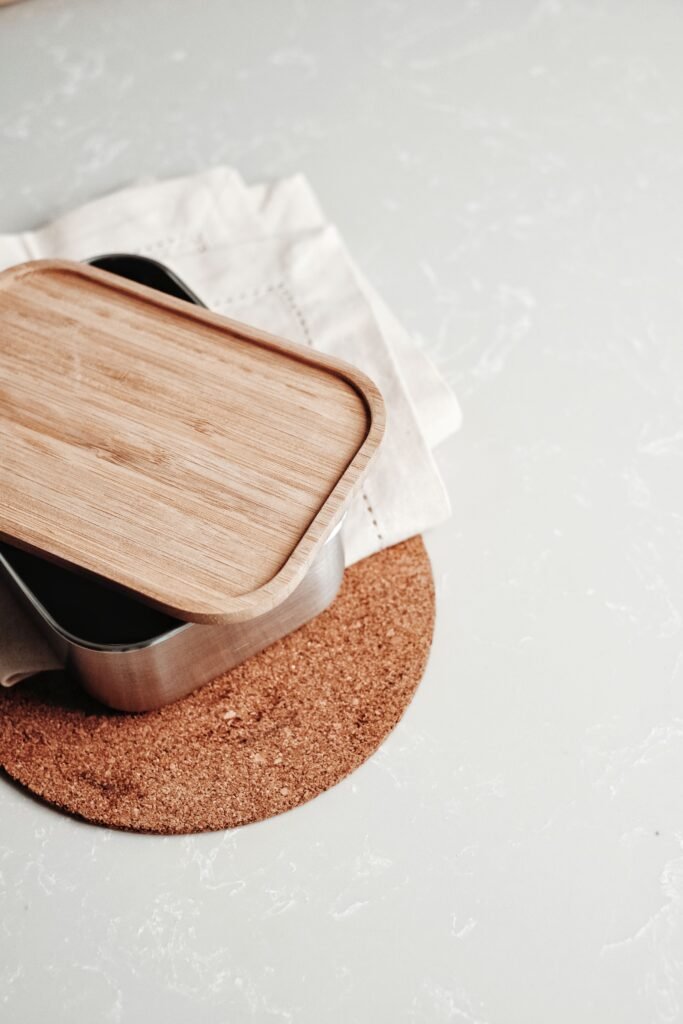
Instead of constantly replacing cheap pots & pans, utensils and storage containers, think about investing in durable products that are designed to last longer.
Stainless steel, glass, cast iron and wooden kitchenware are good options when you’re looking for products that are made to last.
Remember, even in decor, quality over quantity applies. It can help to minimise unnecessary consumption and you probably won’t need to keep replacing the same products again and again.
9. Choose a Kitchen Style You’ll Be Happy With Long-Term
Kitchen trends and joining them can be tempting, but choosing a style just because it’s popular at the time might mean that in a few years’ time you’re going to want to change it again.
When you’re planning your sustainable kitchen design, think about what’ll work for your home and your own personal style in the long term. An efficient layout, good-quality materials and a colour theme that you actually like can help you create a kitchen that you won’t feel the need to update every few years.
However, this doesn’t mean you can’t bring in the smaller trends through things like accessories, artwork or lighting. These are much easier to change when your style changes, and they aren’t so drastic or pricey.
A kitchen that fits your needs and wants as well as not needing to be updated so often can be a more sustainable choice in the long run.
10. Making Sustainable Kitchen Upgrades When Replacing Items
You really don’t need to transform your full kitchen overnight.
One of the easiest paths to sustainable kitchen upgrades is to choose wisely over time.
When your tap needs replacing, look at water-efficient options. When a light bulb stops working, consider LED. When an appliance eventually reaches the end of its useful life, look for an energy-efficient replacement.
These individual decisions can add up over time without having to do a full kitchen renovation in one go.
Creating a more sustainable kitchen doesn’t mean that you have to sacrifice style or completely start again.
There are loads of options out there for sustainable kitchen ideas you can add into your home, whether it’s LED lighting, investing in durable materials, reducing food waste, recycling and so on.
The most important thing is to consider the lifespan of the products and materials you choose, make use of what you already have where possible, and introduce improvements over time.
Without much planning, sustainable kitchen upgrades can help you create a kitchen that looks beautiful, is practical and designed to last!